Quick answer: Nijo Castle (二条城) is the Kyoto residence Tokugawa Ieyasu built in 1603 to project the new shogunate’s authority right next to the Imperial Palace — and, remarkably, the very place where the last shogun handed power back to the Emperor 264 years later. Its Ninomaru Palace, famous for “nightingale floors” that chirp underfoot, is one of the best-preserved examples of feudal-era palace architecture in Japan, and a UNESCO World Heritage Site easily reached by subway from central Kyoto.
A Shogun’s Statement, Built in 1603
When Tokugawa Ieyasu founded the Tokugawa shogunate in 1603, he needed more than a title — he needed a physical presence in Kyoto, the imperial capital, to make that authority unmistakable. He had Nijo Castle built that same year as his official residence whenever he visited Kyoto, deliberately positioned close to the Imperial Palace. It was less a defensive stronghold than a political statement in wood, stone, and gold leaf: the new warrior government was here to stay, and it answered to no one.
The Ninomaru Palace and Its “Nightingale Floors”
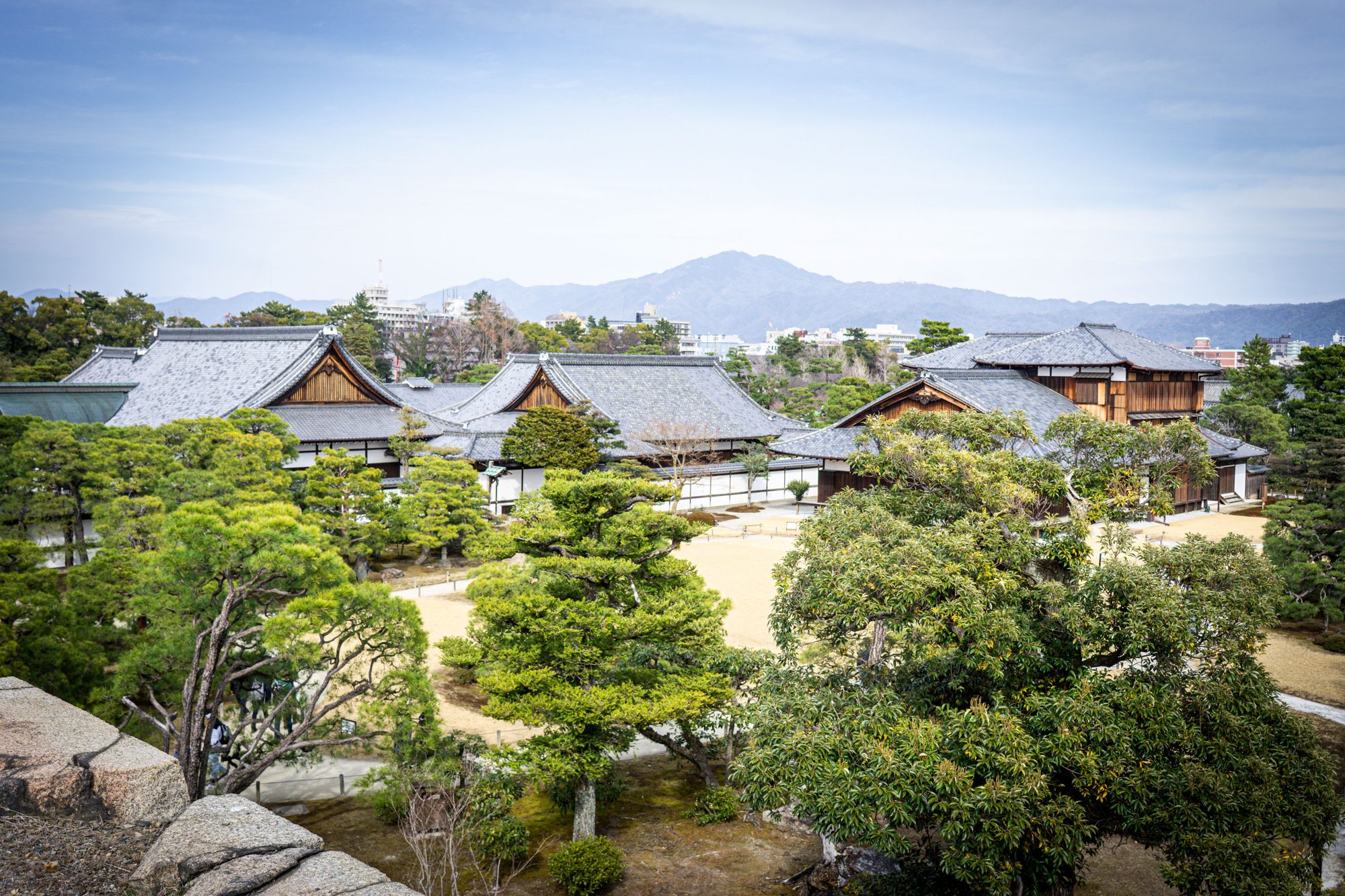
The castle most visitors walk through today owes much of its grandeur to Ieyasu’s grandson, the third shogun Tokugawa Iemitsu, who carried out a major expansion between 1624 and 1626. This work enlarged the Ninomaru Palace, added the ornate Karamon Gate, and built a five-story keep (destroyed by fire in the 18th century). The occasion for all this splendor was a landmark event: in 1626, Emperor Go-Mizunoo left the Imperial Palace to formally visit Nijo Castle over five days — an unprecedented gesture at the time, since emperors simply did not travel to a warrior government’s castle. The visit symbolized the peace the Tokugawa regime had secured after decades of civil war.
The Ninomaru Palace’s corridors are famous for their “uguisubari,” or nightingale floors, which produce a distinctive chirping squeak with every footstep. Popular legend holds that this was a deliberate security measure, engineered with nails and clamps rubbing against the flooring, so that no assassin or spy could cross the shogun’s private chambers unheard. It’s a story every guide in Kyoto will tell you — but it’s worth noting that an information sign inside the castle itself offers a more sober counterpoint: the chirping may simply be the natural result of centuries of wear on the nails and clamps rather than an intentional design feature. Whichever explanation is true, walking the corridors and hearing the floor sing underfoot is one of the castle’s most memorable experiences.
Where the Shogunate Began — and Ended
Nijo Castle’s greatest historical significance may be that it bookends the entire Edo period. It’s not just where the Tokugawa shogunate announced its arrival in 1603 — it’s also where the shogunate announced its own end. In October 1867 (Keio 3), the 15th and final shogun, Tokugawa Yoshinobu, summoned senior domain officials to the Ohiroma (Grand Hall) of the Ninomaru Palace and declared his intention to return political authority to the Emperor, an act known as the Taisei Hokan. The formal petition was submitted to the Imperial Court the following day, and approval was granted the day after that, bringing the 264-year Tokugawa shogunate to a close in the same building complex where it had first taken root.
In 1994, Nijo Castle was inscribed as a UNESCO World Heritage Site as part of “Historic Monuments of Ancient Kyoto,” alongside other landmarks such as Kiyomizu-dera and Kinkaku-ji.

How to Get There
From Kyoto Station (subway — recommended): Take the Karasuma Subway Line from Kyoto Station to Karasuma-Oike Station, then transfer to the Tozai Line and ride one stop to Nijojo-mae Station. The whole trip takes about 15 minutes and costs around 260 yen; the castle’s moat is visible the moment you exit the station.
From Kyoto Station (bus): City Bus No. 9 or No. 50 runs directly from Kyoto Station to the Nijojo-mae bus stop in roughly 15–20 minutes, dropping you right in front of the Higashi Ote-mon (East Gate).
From Tokyo: Take the Tokaido Shinkansen from Tokyo Station to Kyoto Station (about 2 hours 15 minutes on the Nozomi service). From there, follow the subway or bus directions above.
From Osaka: From Shin-Osaka Station, the Tokaido Shinkansen reaches Kyoto Station in about 15 minutes. Alternatively, JR Special Rapid trains run from Osaka Station to Kyoto Station in around 30 minutes, or the Hankyu Kyoto Line/Keihan Main Line connect from central Osaka to Kyoto in roughly 40–45 minutes; from Kyoto Station or the Kawaramachi/Sanjo area, continue by subway or bus as above.
Visiting Tips
- Best seasons: Cherry blossoms (late March–early April) fill the castle’s Ninomaru Garden and Seiryu-en Garden, while autumn foliage (mid-to-late November) turns the moat-side maples brilliant red — both seasons draw large crowds, so early morning visits are best.
- No photography inside Ninomaru Palace: Photography is prohibited inside the palace buildings themselves, so save your camera for the exterior, gardens, and gates.
- Walk the nightingale floor corridors slowly: The chirping is easy to miss if you’re rushing — pause and listen as you move between rooms.
- Combine with the Honmaru area: A separate ticket area lets you explore the Honmaru Palace and former keep foundation, offering elevated views over the Ninomaru rooftops.
- Closed Tuesdays in winter: The castle grounds are closed on Tuesdays in December, January, and July/August (with some exceptions), so check the official schedule before visiting.

FAQ
Is Nijo Castle the same as Nijo Jinya?
No. Nijo Jinya is a separate, smaller merchant residence located near Nijo Castle that is sometimes confused with it due to the similar name; Nijo Castle is the much larger UNESCO-listed former shogunal residence covered in this guide.
How long should I plan to spend at Nijo Castle?
Most visitors spend 1.5–2.5 hours touring the Ninomaru Palace, gardens, and Honmaru area at a comfortable pace.
Can I still hear the nightingale floors today?
Yes — the nightingale floor corridors in the Ninomaru Palace remain in daily use for visitors walking through the palace, and the squeaking sound is very much still audible.

Don’t waste your first day in Japan hunting for WiFi
Install it before you board — your eSIM is already connected the second you land.
🏪 No shop visit
💳 No roaming bill shock
2-minute setup · works the moment you land
Leave a Reply