Quick answer: Perched on a cliff above the Kiso River, Inuyama Castle’s keep dates to the 1600s and is the oldest surviving original tenshu (castle tower) among Japan’s twelve castles that still retain their genuine, pre-modern keeps — as opposed to the many “castles” around the country that are 20th-century concrete replicas. Built in 1537 and held by the Naruse family as feudal lords for nine generations, it also has an unusual modern claim to fame: until 2004, it was the only privately owned castle — and privately owned National Treasure — in Japan.

A Frontier Fortress on the Kiso River (1537)
Inuyama Castle was built in 1537 by Oda Nobuyasu, an uncle of the future unifier Oda Nobunaga (some records credit the hands-on construction work to Nobuyasu’s retainer, Oda Hirochika). Its location was chosen for defense: the castle sits atop a steep bluff directly above the Kiso River, on the border between what are now Aichi and Gifu prefectures, a boundary line that made it a frequent flashpoint during the Sengoku period’s constant territorial conflicts. Because of this exposed position, the castle changed hands numerous times across the sixteenth century as regional power shifted, long before Japan’s unification settled such disputes.
The Naruse Family’s 400-Year Watch
In 1617, early in the Edo period, the second Tokugawa shogun, Hidetada, granted Inuyama Castle to Naruse Masanari, a senior retainer of the Owari Tokugawa family based at nearby Nagoya Castle. From that point, nine successive generations of the Naruse family served as lords of Inuyama for the better part of four centuries — an unusually long, stable tenure by the standards of a country where castle lordships frequently changed with the political winds. That family connection outlasted the feudal system itself: unlike almost every other Japanese castle, which passed into municipal or national ownership after the Meiji Restoration abolished the domains, Inuyama Castle remained the Naruse family’s private property. It held the distinction of being Japan’s only privately owned castle — and the only privately owned National Treasure — until 2004, when the family transferred ownership to a newly established public foundation to ensure its long-term preservation.

The Oldest Surviving Tower Among the “Twelve Original Castles”
Of the hundreds of castles built across Japan, only twelve retain a tenshu that genuinely dates from the pre-modern era rather than being a postwar concrete reconstruction. Inuyama’s keep, believed to date substantially from the early 1600s, is recognized as the oldest of these twelve, and — along with Himeji, Matsumoto, Hikone, and Matsue castles — is one of just five whose towers carry the designation of National Treasure, Japan’s highest tier of cultural protection. The keep’s relatively modest, three-story exterior (with an interior of four floors plus a basement) belies its historical value: little about its construction has been altered since the Edo period, giving visitors a rare, largely unfiltered look at how a functioning feudal-era keep was actually built and used.
How to Get There
From Tokyo: Take the Tokaido Shinkansen to Nagoya Station (about 1 hour 40 minutes on the Nozomi), then continue as below.
From Osaka/Shin-Osaka: Take the Tokaido Shinkansen to Nagoya Station (about 50 minutes on the Nozomi).
By air: Fly into Chubu Centrair International Airport, then take the Meitetsu line to Nagoya Station (around 30–35 minutes) and continue as below.
From Nagoya to Inuyama: From Meitetsu Nagoya Station (adjacent to JR Nagoya Station), take a Meitetsu Inuyama Line limited express or semi-express train directly to Inuyama Station — the ride takes about 25–35 minutes depending on the service.
From Inuyama Station to the castle: It’s roughly a 20-minute walk through the old castle town along Honmachi Street. Alternatively, get off one stop earlier at Inuyama-Yuen Station, from which it’s about a 15-minute walk through a quieter route.
| Route | Time |
|---|---|
| Tokyo → Nagoya (Tokaido Shinkansen, Nozomi) | ~1h40m |
| Shin-Osaka → Nagoya (Tokaido Shinkansen, Nozomi) | ~50 min |
| Chubu Centrair Airport → Nagoya Station (Meitetsu) | 30–35 min |
| Meitetsu Nagoya → Inuyama Station | 25–35 min |
| Inuyama Station → Castle (on foot) | ~20 min |
Visiting Tips
- Pair it with Meiji-Mura or Little World: both are open-air museums a short bus ride from Inuyama Station, making the castle an easy half-day or full-day trip from Nagoya.
- Climb to the top floor: unlike many reconstructed castles, Inuyama’s interior stairs are original and steep — wear comfortable shoes, and note the castle can be crowded on weekends.
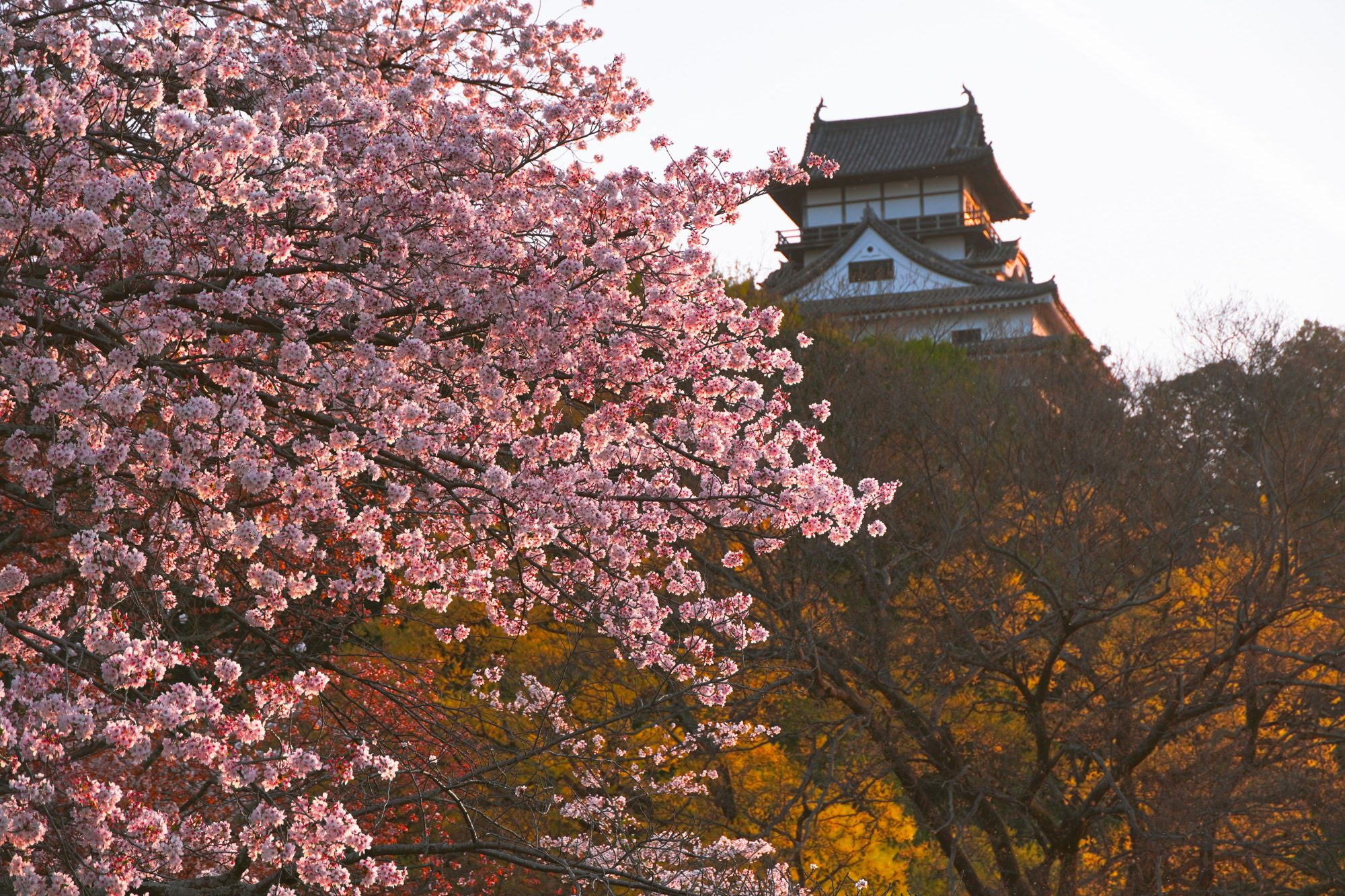
- Cherry blossom season (late March–early April) along the Kiso River is a particularly scenic time to visit, with sakura framing the keep from below.
- Combine with Nagoya Castle for a compact comparison of two very different Aichi castles — one an original Edo-period keep, the other a modern reconstruction.
FAQ
Q: Is Inuyama Castle’s tower an original structure, or a reconstruction?
A: It’s original — one of only twelve castle keeps in Japan that genuinely date from the pre-modern era, and the oldest of those twelve.
Q: Is it true a private family owned this castle until recently?
A: Yes. The Naruse family held Inuyama Castle privately for nine generations after receiving it in 1617, making it Japan’s last privately owned castle until ownership passed to a public foundation in 2004.
Q: How much time should I plan for a visit?
A: About 1–1.5 hours for the castle itself; add another 1–2 hours if you plan to walk the historic Honmachi Street castle town on the way.
Getting There
Nearest station: Meitetsu Inuyama-Yuen Station, on the Meitetsu Inuyama Line (about 30 minutes from Nagoya Station).
From Inuyama-Yuen Station it’s roughly a 15–20 minute walk to the castle. If you’d rather skip the walk, a community bus runs from the station to the foot of the castle hill.

Don’t waste your first day in Japan hunting for WiFi
Install it before you board — your eSIM is already connected the second you land.
🏪 No shop visit
💳 No roaming bill shock
2-minute setup · works the moment you land
Leave a Reply