
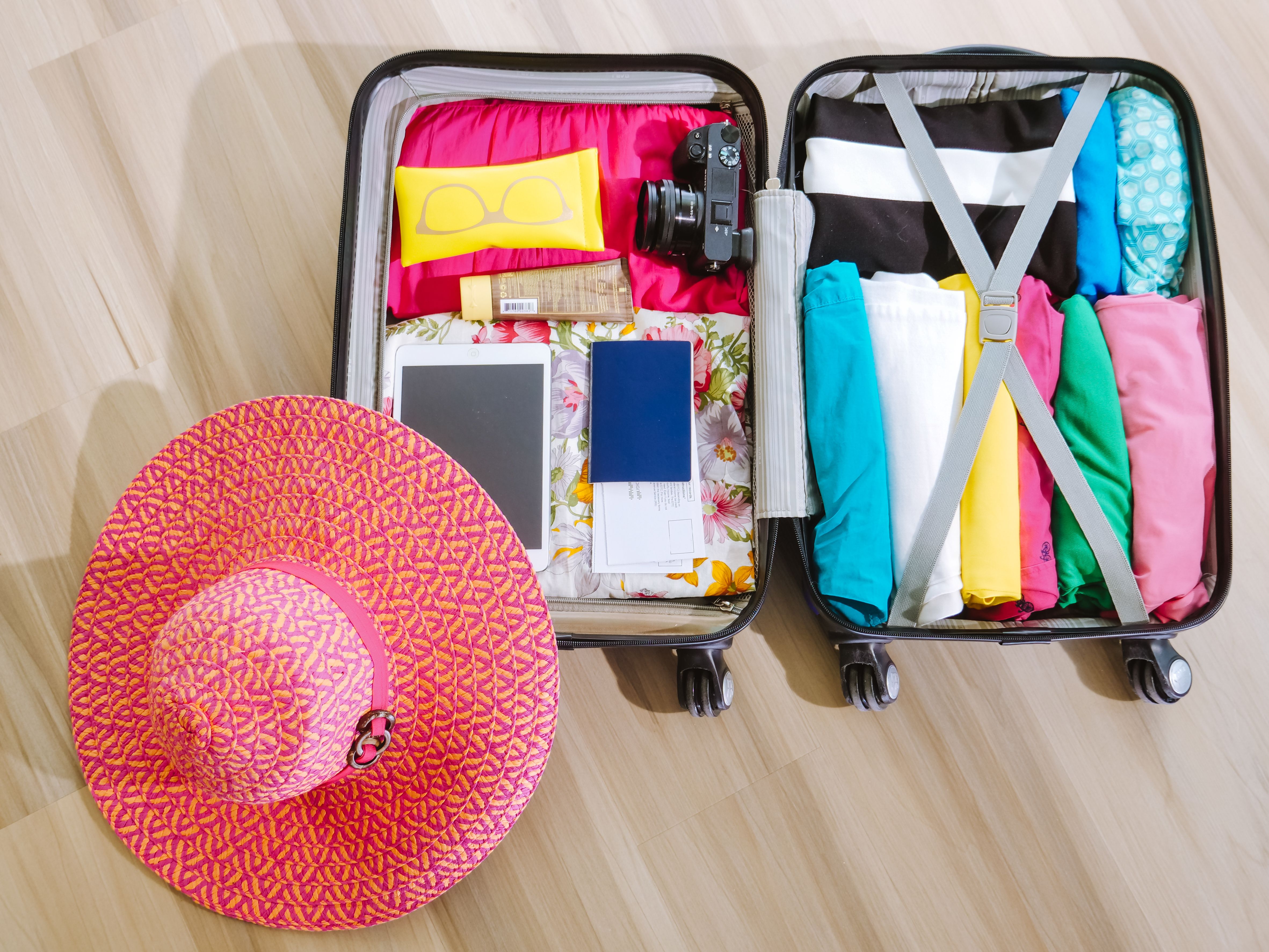

Japan is safe, clean, and famously convenient — but a handful of small items make the difference between a smooth trip and constant friction. Here are 13 travel essentials past visitors wish they’d packed before landing — most cost well under ¥2,000.
1. Universal Travel Adapter

Japan runs on 100V with Type A (two flat-pin) plugs — the same shape as the US and Canada, but the 100V voltage trips up visitors from the UK, Australia, and most of Europe, where appliances are built for 220–240V. A hairdryer or straightener without voltage switching will not just fail — it can smoke on a Japanese outlet. Bring a universal adapter and check your device’s label for “100–240V” before plugging in anything high-wattage.
View universal travel adapters on Amazon →
2. Pocket WiFi or eSIM

Free public WiFi in Japan is patchy outside train stations and convenience stores, and few visitors want to hunt for a SIM counter after a 12-hour flight. An eSIM installed before departure activates the moment you land — no shop visit, no paperwork. (Full setup guide and offer at the bottom of this article.)
3. Portable Power Bank

Japanese convenience stores (konbini) and train platforms have surprisingly few public charging outlets, and a day of Google Maps, translation apps, and IC card taps drains a phone by early afternoon. A 10,000mAh+ power bank with USB-C output covers a full day of GPS-heavy sightseeing.
View portable power banks on Amazon →
4. Comfortable Walking Shoes

Tokyo commuters average 6–8km of walking a day without even trying — transfer corridors at stations like Shinjuku stretch several hundred meters underground, and historic sites like Fushimi Inari or Kiyomizu-dera involve stone steps and gravel paths. Broken-in, cushioned shoes matter more in Japan than almost anywhere else; leave the brand-new pair at home.
View comfortable walking shoes on Amazon →
5. Packing Cubes

Japanese hotel rooms, especially in city centers, run smaller than their Western equivalents, and coin laundromats are common enough that most travelers repack more than once per trip. Compression packing cubes keep a shrinking suitcase organized and let you grab exactly what you need without unpacking everything onto a twin-size bed.
View packing cubes on Amazon →
6. Foldable Reusable Shopping Bag

Japan introduced a mandatory plastic bag fee in July 2020, and convenience stores, drugstores, and department stores all ask “Do you need a bag?” (usually ¥3–¥5) at checkout. A compact foldable tote solves this and doubles as extra packing space for souvenirs on the way home.
View foldable shopping bags on Amazon →
7. Compact Travel Umbrella

Japan’s rainy season (tsuyu) typically runs early June through mid-July, and sudden afternoon showers are common in summer even outside that window. Convenience stores sell clear plastic umbrellas everywhere, but a proper compact travel umbrella holds up better in wind and saves you from carrying a bag of disposable ones by the end of the trip.
View compact travel umbrellas on Amazon →
8. Noise-Cancelling Headphones

Between long-haul flights and multi-hour Shinkansen rides, most Japan itineraries include serious transit time. Japanese trains also enforce a strict no-phone-call, quiet-carriage culture, so headphones aren’t just for comfort — they’re the easiest way to watch something or take a call between cars without disturbing anyone.
View noise-cancelling headphones on Amazon →
9. Slip-On Shoes

Temples, shrines, ryokan, and many restaurants require you to remove your shoes at the entrance — and some ryokan and all tatami rooms require socks-only feet beyond that point. The rule of thumb: step out of your shoes directly onto the raised floor, and step back into them directly on the way out. Laced sneakers turn this into a fumbling, ten-second ordeal several times a day; slip-on shoes make it a non-event.
View slip-on shoes on Amazon →
10. Handheld Fan

Summer in Japan regularly passes 35°C with heavy humidity — hot enough that the Japanese have a specific word for it, “mōshobi” (猛暑日). Locals combat this with handheld fans everywhere: train platforms, shrine queues, festival crowds. A USB-rechargeable handheld fan weighing around 200g is the single highest-impact, lowest-cost item on this list — just remember it uses a lithium battery, so pack it in your carry-on, not checked luggage.
View handheld fans on Amazon →
11. Coin Purse

Japan stopped printing banknotes smaller than ¥1,000 back in 1984, so everything below that is a coin — six denominations in total (¥1, ¥5, ¥10, ¥50, ¥100, ¥500). Combine that with a still-heavily cash-based society and coin-only vending machines on every corner, and a flat wallet fills up with loose change fast. A dedicated coin purse keeps it sorted instead of dumped in a pocket or the bottom of a bag.
12. Reusable Water Bottle

Tap water is safe to drink anywhere in Japan, and free refill fountains are common at train stations, parks, and public facilities — the MyMizu app alone lists over 5,800 free refill spots nationwide. A reusable bottle turns what would be daily ¥120–150 vending-machine purchases into free refills. (One exception: don’t drink from the stone water basins at shrine entrances — those are for ritual purification, not hydration.)
View reusable water bottles on Amazon →
13. Sunscreen — But Only a Small Tube

This is the one item where the advice runs backward: don’t overpack it. Japanese summer sun is intense (most local sunscreens are formulated to SPF50+ / PA++++), and Japanese sunscreen has become genuinely famous worldwide — Biore UV Aqua Rich (Japan’s best-selling drugstore sunscreen, around ¥700) and Anessa’s gold bottle (around ¥2,500, using Shiseido’s “Aqua Booster” technology that gets stronger with sweat and water) are both TikTok-viral picks that outperform most sunscreens available back home, and both are sold tax-free to tourists at Matsumoto Kiyoshi or Don Quijote. Bring a small tube to survive day one, then restock at any drugstore once you land.
View travel-size sunscreen on Amazon →

Don’t waste your first day in Japan hunting for WiFi
Install it before you board — your eSIM is already connected the second you land.
🏪 No shop visit
💳 No roaming bill shock
2-minute setup · works the moment you land
Leave a Reply