
Quick answer: Konjikido, the Golden Hall at Chuson-ji temple in Hiraizumi, was built in 1124 by Fujiwara no Kiyohira, founder of the Oshu Fujiwara clan, and is the only structure surviving from Hiraizumi’s 12th-century golden age. Covered inside and out in gold leaf and lacquer, it also serves as the mausoleum of four generations of Fujiwara lords, and in 2011 it became the centerpiece of the UNESCO World Heritage Site “Hiraizumi — Temples, Gardens and Archaeological Sites Representing the Buddhist Pure Land.”
A Temple Built to End a Cycle of War
Chuson-ji’s founder, Fujiwara no Kiyohira, began large-scale construction on the temple in 1105. His motive wasn’t conquest or prestige — it grew out of personal loss. Kiyohira had lived through decades of brutal regional warfare in northeastern Japan, including the Former Nine Years’ War (1051–1062) and the Latter Three Years’ War (1083–1087), conflicts that killed members of his own family. According to temple tradition, Kiyohira vowed to build a Buddhist Pure Land on earth at Hiraizumi and to pray for the souls of everyone who had died in those wars — allies and enemies alike, and even animals lost in the fighting — hoping to end the region’s cycle of violence for good.
That vow shaped Hiraizumi for the next century. Under four generations of Oshu Fujiwara rule, the town grew into one of the wealthiest and most sophisticated cities in Japan, built on the strength of regional gold mines and trade routes, and briefly rivaled Kyoto as a center of Buddhist culture in the north.
Konjikido: Built in 1124, Covered in Gold
Konjikido was completed in 1124, toward the end of Kiyohira’s life, as the centerpiece of that vision. The hall is small by temple standards — roughly 5.5 meters square — but extraordinarily dense in decoration: gold leaf covers the exterior and interior alike, and the surfaces are further inlaid with mother-of-pearl, cut gold-leaf patterns (kirikane), and metal fittings of silver and gilt bronze. It’s the only building at Chuson-ji that survives in its original 12th-century form, and it remains a symbol of the “gold culture” that made Hiraizumi famous even in medieval Kyoto.

Less visibly, Konjikido is also a mausoleum. The mummified remains of Kiyohira and his son and successor, Motohira, along with the body of third-generation lord Hidehira, are said to be enshrined together within its altars, a highly unusual arrangement for a Buddhist hall of this kind.
The Fall of the Oshu Fujiwara
The Oshu Fujiwara’s independence ended abruptly in 1189. Fourth-generation lord Yasuhira, under pressure from the shogun-to-be Minamoto no Yoritomo — who accused Hiraizumi of sheltering his fugitive brother, Minamoto no Yoshitsune — was defeated in the Oshu Campaign, and with his death the century of Fujiwara rule collapsed. Hiraizumi never regained its earlier prominence, but Chuson-ji and Konjikido survived, protected over the following centuries by a wooden cover-building (sayado) built around the hall to shield it from the elements — a protective structure still in use, in updated form, today.
A UNESCO World Heritage Site
In 2011, Chuson-ji and Konjikido became the centerpiece of “Hiraizumi — Temples, Gardens and Archaeological Sites Representing the Buddhist Pure Land,” a UNESCO World Heritage listing that also includes nearby Motsu-ji, Kanjizaio-in Ato, and Muryoko-in Ato. The listing recognizes Hiraizumi’s temples and gardens as a rare, mostly intact expression of Pure Land Buddhist cosmology built into physical architecture and landscape design — an idea Kiyohira had already put into practice here nearly 900 years earlier.
Quick facts:
- Chuson-ji construction began: 1105, under Fujiwara no Kiyohira
- Konjikido completed: 1124
- Oshu Fujiwara rule ended: 1189, in the Oshu Campaign led by Minamoto no Yoritomo
- World Heritage status: Part of “Hiraizumi,” inscribed 2011
- Notable feature: Only original 12th-century structure surviving at Chuson-ji; mausoleum of three Fujiwara lords
How to Get There
Hiraizumi is a small town in Iwate Prefecture, in the Tohoku region of northern Japan.
- From Tokyo: Take the Tohoku Shinkansen (Yamabiko) from Tokyo Station to Ichinoseki Station. The ride takes about 2.5 hours.
- From Ichinoseki Station: Transfer to the local JR Tohoku Line bound for Morioka and get off at Hiraizumi Station, one stop away (about 8–10 minutes). Regular direct buses also run between Ichinoseki Station and Hiraizumi’s temples, roughly once an hour.
- From Hiraizumi Station to Chuson-ji: It’s about a 10-minute ride or a 30-minute walk. The “Run Run” loop bus circles from the station to Motsu-ji, Chuson-ji, and Takadachi Gikeido roughly every 30 minutes; a single ride costs around 200 yen, and an unlimited day pass is available for about 550 yen.
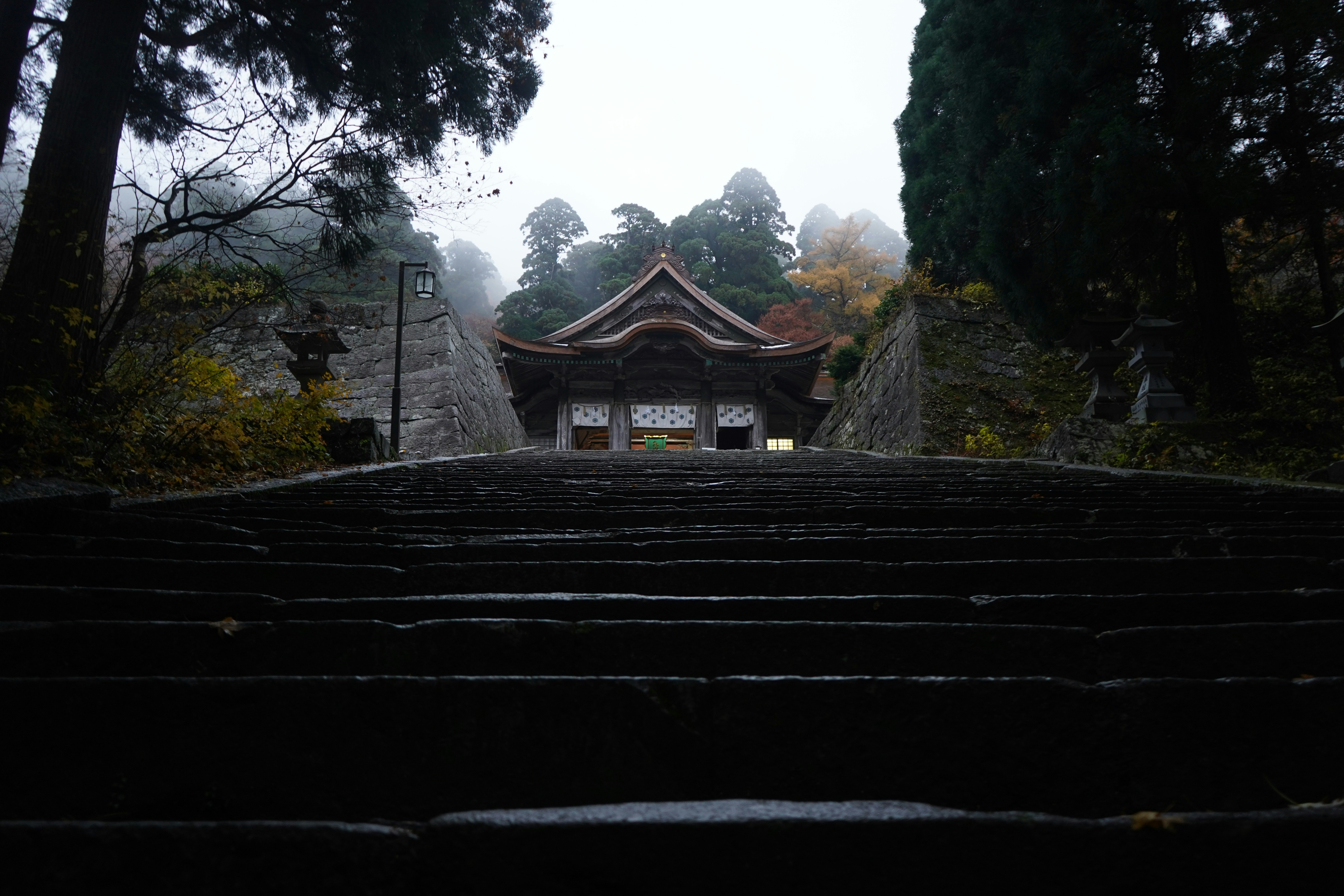
- Once inside the Chuson-ji grounds, it’s a further uphill walk along a cedar-lined approach path (the Tsukimizaka slope) to reach Konjikido itself, near the top of the hill.
Practical tips: Photography is not permitted inside Konjikido’s protective cover-building, so the interior is best appreciated in person rather than through photos. Budget around 1.5 to 2 hours for the full walk up through Chuson-ji’s grounds to Konjikido and back down. Autumn (roughly late October to early November) is a particularly popular time to visit, when the cedar-forested approach path turns with fall color.
Getting There
Nearest station: Hiraizumi Station, on the JR Tohoku Main Line.
From Hiraizumi Station, the Runrun loop bus reaches the Chuson-ji stop in about 10 minutes; walking the same route, mostly uphill, takes about 20–30 minutes on foot. Konjikido itself sits a further 10–15 minute walk up through the temple precinct from the main gate.
FAQ
- Is Konjikido the same as Chuson-ji? No — Chuson-ji is the whole temple complex, founded in 1105; Konjikido (“Golden Hall”) is one specific building within it, completed in 1124 and now housed inside a protective outer structure.
- Can visitors go inside Konjikido? Visitors can view the hall from a walkway inside its protective cover-building, but cannot enter the hall itself, and photography inside is prohibited.
- Is Hiraizumi easy to visit as a day trip from Tokyo? Yes — with the Tohoku Shinkansen to Ichinoseki and a short local transfer, it’s feasible as a long day trip from Tokyo, though many visitors prefer to combine it with an overnight stay in the Tohoku region.

Don’t waste your first day in Japan hunting for WiFi
Install it before you board — your eSIM is already connected the second you land.
🏪 No shop visit
💳 No roaming bill shock
2-minute setup · works the moment you land
Leave a Reply