
Quick answer: Himeji Castle’s current form dates to a massive renovation carried out from 1601 to 1609 by the feudal lord Ikeda Terumasa, built on top of a smaller fortress originally raised by Toyotomi (then Hashiba) Hideyoshi in 1581. It’s survived the end of the samurai era, World War II air raids, and centuries of earthquakes and typhoons largely intact — which is why it’s both a UNESCO World Heritage Site and a National Treasure of Japan, and the largest and best-preserved original castle in the country.
From a Modest Fort to Hideyoshi’s Foothold
Long before the white castle tourists photograph today, the hill at Himeji held a much smaller fortification. The turning point came in 1581, when the warlord Hashiba Hideyoshi — who would later unify Japan under the name Toyotomi Hideyoshi — built a modest three-story keep on the site as a strategic base in western Japan. It was a functional fort, not yet the palatial complex it would later become.
The Great Renovation: 1601–1609
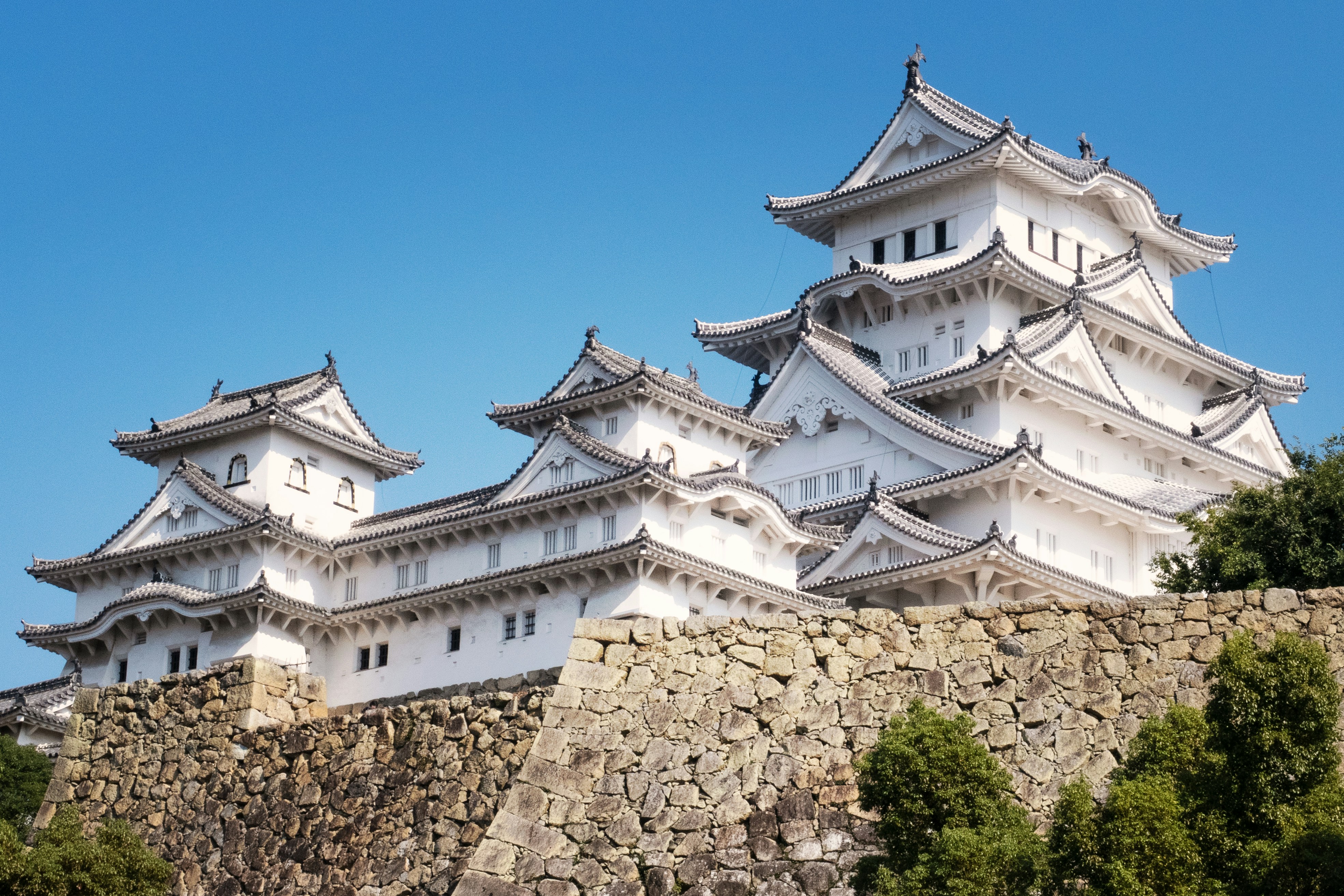
Everything changed after the Battle of Sekigahara in 1600, the decisive clash that put Tokugawa Ieyasu in control of Japan. As a reward for his support, Ieyasu granted Himeji to his son-in-law, Ikeda Terumasa. Between 1601 and 1609, Terumasa tore down and rebuilt the castle almost entirely, transforming it into the sprawling complex seen today: a soaring main keep connected to three smaller keeps, dozens of gates, and a maze-like network of baileys designed to confuse and slow down any attacking army.
The scale of the project was staggering for its time — historians estimate the work required roughly 2.5 million person-days of labor. Terumasa also fortified the surrounding castle town with new moats and earthworks, effectively building an entire defensive city around the keep.

Why It’s Called the White Heron Castle
The nickname Shirasagi-jo (“White Heron Castle”) comes directly from Terumasa’s renovation. To protect the wooden structure from fire and weather, the castle’s exterior walls, and even its roof tiles, were coated in white plaster (shikkui). From a distance, the pale, tiered silhouette of the main keep — with its gently curved gables — is said to resemble a white heron taking flight, a comparison that has stuck for over four centuries.
Surviving War, Weather, and Time
Himeji Castle’s survival is almost as remarkable as its architecture. It came through the abolition of the feudal domains in the 19th century, when many other Japanese castles were demolished as symbols of the old order. During World War II, Himeji was hit by Allied bombing raids that devastated much of the surrounding city — and in one widely retold piece of local history, an incendiary bomb that struck the main keep reportedly failed to detonate. The castle also survived the 1995 Great Hanshin earthquake with only minor damage. As a result, roughly 80 of its original Edo-period buildings, including the main keep and its three subsidiary keeps, still stand largely as Terumasa left them.

National Treasure and World Heritage Site
Himeji Castle’s main keep, along with several other structures, has been designated a National Treasure of Japan. In 1993, it was one of the first sites in the country to be inscribed on the UNESCO World Heritage List (alongside Horyuji), recognized as the finest surviving example of early 17th-century Japanese castle architecture. Because so much of it is original rather than reconstructed — unlike many other famous Japanese castles, which are concrete replicas rebuilt after wartime destruction — Himeji is often described as Japan’s most authentic surviving castle.
Timeline at a Glance
| Year | Event |
|---|---|
| 1581 | Hashiba (later Toyotomi) Hideyoshi builds an early three-story keep on the site |
| 1600 | Battle of Sekigahara; Tokugawa Ieyasu grants Himeji to Ikeda Terumasa |
| 1601–1609 | Terumasa’s major renovation creates the current castle complex |
| 1945 | Himeji city is heavily bombed in WWII; the castle itself survives largely intact |
| 1993 | Registered as a UNESCO World Heritage Site |
Visiting Today
The main keep rises about 46 meters above its stone base and can be climbed via steep wooden staircases inside — a rare chance to experience an authentic castle interior rather than a modern museum reconstruction. The surrounding Nishi-no-Maru gardens are also one of the most popular cherry blossom spots in the Kansai region each spring.
Getting There
Nearest station: JR Himeji Station (or the adjacent Sanyo-Himeji Station).
From the North Exit of JR Himeji Station, walk straight up the broad Otemae-dori street for about 15–20 minutes and the castle comes into view ahead of you. If you’d rather not walk, a bus from the station takes about 5 minutes (¥210), and a taxi takes about 5 minutes (¥800–1,000).
FAQ
- Is Himeji Castle the original building, or a reconstruction? It’s original — most of the main structures date to the 1601–1609 renovation and have never been destroyed and rebuilt, which is unusual among Japan’s famous castles.
- How is Himeji different from castles like Osaka or Nagoya? Osaka Castle and Nagoya Castle are both modern concrete reconstructions built after their original wooden keeps were destroyed (Osaka by fire and war, Nagoya in WWII bombing). Himeji’s keep is the real, centuries-old wooden structure.
- Why is it called the White Heron Castle? Because of its white-plastered walls and roof tiles, added during the 1601–1609 renovation to protect against fire, which give the castle a bright, bird-like silhouette from a distance.

Don’t waste your first day in Japan hunting for WiFi
Install it before you board — your eSIM is already connected the second you land.
🏪 No shop visit
💳 No roaming bill shock
2-minute setup · works the moment you land
Related Guides
Leave a Reply